
info@banidasolutions.com

  • Banida Solutions Facebook Page
    update
  • update
  • update
  • Banida Solutions LinkedIn Page
    update
  • update
  • update
  • update

banida solutions logo
UPDATE
  • Home
  • Blog
  • Categories
    • Industry News & Trends
    • Digital Marketing Strategies
    • Digital Tools & Software
    • Content Creation & Optimization
May 14.2026
1 Minute Read

Unlock Solar Sales Fast with Social Media Marketing for Solar Companies

Modern solar panels on a suburban rooftop—consumers using solar energy app as part of a solar company

Picture a solar company watching competitors surge ahead while their phones keep buzzing with qualified leads—all driven by a digital presence that works around the clock. In today’s market, depending solely on door-to-door outreach, refez rrals, or an outdated website isn’t just limiting—it puts your growth at risk. Social media marketing for solar companies has become the real game-changer, separating those who are barely keeping up from those who are consistently scaling.

In this guide, we’ll break down practical, evidence-based strategies to help you attract higher-quality solar leads, build genuine trust with your audience, and turn casual followers into engaged prospects and booked appointments. The goal is simple: create a social media system that doesn’t just get attention, but reliably drives measurable business growth.

Why Social Media Marketing for Solar Companies is Non-Negotiable

In the rapidly evolving digital market for renewable energy, solar companies face a stark choice: adapt to the new era of social media marketing or risk getting left behind by faster-moving competitors. Social media has become a primary ground for both B2C and B2B solar lead generation, thanks to its ability to build brand awareness and deliver authentic, educational content right to the fingertips of potential customers. This is not about “jumping on the bandwagon” but about seizing a genuine opportunity that aligns with how the modern solar buyer researches and chooses solar solutions.

Solar businesses that prioritize digital marketing strategies consistently outperform those clinging to outdated methods. The right social media marketing for solar companies doesn’t just boost engagement; it shapes perception, generates qualified leads, and positions your solar company as a trusted authority. From Facebook to LinkedIn, platforms are search engines in their own right, where solar industry conversations—and customer decisions—happen daily. Not participating is no longer an oversight; it’s leaving solar sales on the table. Below, we’ll break down the practical, field-tested approaches that help solar companies win in the digital market, and show how your team can transform online visibility into real-world results.

The Missed Opportunity Without Social Media Marketing

Picture this: A potential solar customer in your area types “best solar panels near me” into Facebook or searches for local solar installer reviews on Instagram Stories. If your solar company hasn’t optimized its social strategy—regular posts, engaging stories, up-to-date reviews, and direct response campaigns—you’re invisible. Worse still, your competitors are right there, ready with testimonial videos, instant chat, and a digital door wide open. Companies not leveraging media marketing not only miss solar leads; they miss early trust-building moments and are left scrambling to catch up.

Where Solar Companies Are Winning with Social Media Marketing

Solar companies leading the digital market consistently use social media to educate, engage, and convert. They deploy content such as quick video tours of recent solar energy installations, highlight measurable savings in customer case studies, and spark conversations with polls about renewable energy decisions. These tactics position their brand as accessible, knowledgeable, and trustworthy, proving the direct line between a robust digital marketing presence and high-quality solar leads. Through targeted campaigns, these companies aren’t just seen—they’re contacted, and their sales teams are busy closing appointments instead of cold-calling.

Successful solar company owner monitoring social media dashboard for solar lead generation.

The Changing Solar Industry Landscape: Role of Digital Marketing and Social Media

Solar Industry Trends Influencing Media Marketing

The solar industry is experiencing a digital transformation. As homeowners and businesses turn to online platforms for information and community validation, solar companies must adapt their marketing strategies to remain visible and credible. Trends such as increased search engine use for “solar panel installation reviews” and rapid sharing of solar energy blogs and educational posts on platforms like Facebook and LinkedIn reveal that the target audience is both informed and actively seeking trusted industry voices.

Media marketing is responding to these shifts by focusing on content that not only educates but also addresses real-world concerns—cost savings, environmental benefits, efficiency, and updates on local incentives or regulations. Smart solar companies integrate data-driven approaches and social listening to remain agile, ensuring that digital market efforts are based on emerging needs and behaviors in the solar solutions space. Staying current isn’t just an option—it’s required to cultivate ongoing trust and long-term solar business growth.

Solar Companies and the Digital Market: Adapting to Changing Consumer Behaviors

Consumer behavior has shifted dramatically: before purchase, most solar leads interact with at least three to five digital touchpoints—review sites, blog posts, social feeds, and online testimonials. Today’s solar buyer expects a fast, informative, and personalized experience. Solar companies must respond with a marketing strategy that spans both search engines and social channels, delivering the right message at the right moment. That means optimizing content for keywords like “best solar panel installer” while building visual stories that resonate emotionally.

To really build trust, solar businesses need to meet potential customers where they already spend time—on social media—and convert passing interest into meaningful engagement. By tracking digital marketing data and aligning content with common customer questions (such as those addressed in FAQs), solar companies can guide prospects through every stage of the buying journey, from education to inquiry to committed sale. This omnichannel mindset sets modern solar marketing apart and is vital for sustainable growth.

As you refine your digital marketing approach, it's important to consider how technical enhancements like schema markup can impact your solar company's online visibility. Leveraging structured data not only supports your SEO efforts but also ensures your content stands out in search results, making it easier for potential customers to find and trust your business.

Successful solar company owner monitoring social media dashboard for solar lead generation.

Fundamentals of Social Media Marketing for Solar Companies

Key Social Platforms for Solar Company Growth

To maximize solar lead generation, it’s essential to leverage the most effective social media platforms tailored for solar companies:

  • Facebook: Excellent for local advertising, event promotion, and interactive posts that spark community questions about solar panels and energy savings. Leads captured here are often direct and ready for sales follow-up.

  • LinkedIn: Ideal for building business partnerships, demonstrating thought leadership, and connecting with commercial solar buyers or industry collaborators.

  • Instagram: Perfect for showcasing real installations, educational infographics, and engaging a visually-driven audience interested in environmental impact stories.

  • X (Twitter): Suited for fast-paced solar industry updates, networking, and establishing authority on trending solar solutions and policy discussions.

Most successful solar marketing strategies blend these channels, optimizing each for the target audience they serve. Your digital marketing agency or in-house team should focus on platform-specific tactics, such as boosting posts, responding to comments in real-time, and using analytics tools to identify which types of solar energy content resonate most.

Building a Solar Marketing Strategy for Social Media

Launching a high-impact social media marketing strategy for solar companies starts with clarity and precision. Begin by setting clear digital marketing objectives: Do you want to boost brand awareness, generate more solar leads, or drive qualified traffic to your site? Define your target audience and develop solar buyer personas, using CRM data, customer feedback, and platform analytics to ensure messaging fits their needs and pain points. Consider where your ideal customers spend time online and what motivates them—from cost savings to environmental value.

  • Setting digital marketing objectives for solar growth (e.g., number of leads or new followers per month)

  • Defining target audience and solar buyer personas to sharpen message relevance

  • Competitive analysis of other solar companies in the digital market—identify what’s working (and what isn’t) in your region or segment

Next, integrate findings into a solar marketing strategy calendar, assigning responsibilities across your solar business team and ensuring ongoing campaign optimization. The key is to blend measurable targets with flexible tactics, creating a system that adjusts to real-time performance data and market trends. Ultimately, a well-built strategy helps solar companies move beyond random posting and toward consistent, sustainable growth.

Dynamic solar sales team in a modern office reviewing digital charts for social media marketing for solar companies.

Essential Media Marketing Strategies for Solar Companies

Content Types Effective for Social Media Marketing for Solar Companies

Not all content is created equal when it comes to media marketing for solar companies. High-performing strategies emphasize educational, engaging, and credible materials, such as:

  • Educational posts and infographics explaining solar panel technology, incentives, or the solar energy installation journey

  • Case studies and success stories featuring real-world customer experiences with solar company installations

  • Interactive polls and questions to initiate dialogue and capture social leads’ preferences or pain points

  • Video content and virtual tours providing authentic insight into solar business processes, team expertise, and completed projects

Field-tested blog posts and live Q&A sessions can also build trust, drive shares, and nurture the lead generation funnel. Solar companies that consistently use these content types see higher engagement, stronger social proof, and a noticeable uptick in the quality of solar leads.

Integrating SEO and Social Media for Stronger Solar Marketing Results

When you combine search engine optimization (SEO) with your social media marketing strategy, you create a powerful system that makes your solar company easier to find, more credible, and more consistently visible across multiple platforms. Instead of treating SEO and social media as separate efforts, they should work together—using keywords like “solar panel installation” and “solar lead generation” naturally within your posts, captions, video descriptions, and even transcripts to improve discoverability and relevance in search results.

This integration also strengthens how users move from awareness to action. Social media becomes the entry point, but your website becomes the conversion hub, where deeper engagement and lead tracking happen through landing pages and service content. At the same time, sharing customer reviews, testimonials, and user-generated content adds powerful trust signals that influence both search rankings and buyer confidence. Together, these efforts create a reinforcing loop—boosting visibility in search engines while keeping your solar brand active and credible in social feeds, ultimately driving a more consistent flow of qualified leads.

Solar marketing manager posting cross-platform social media campaigns for solar lead generation.

Step-By-Step Social Media Marketing Framework for Solar Companies

  • Audit your current digital market and social presence - Review how your solar company currently appears online by evaluating your website, social media profiles, engagement levels, and competitor activity to identify gaps and opportunities for improvement.

  • Set measurable goals for solar lead generation - Define clear, trackable objectives such as increasing quote requests, booked consultations, or website traffic so your social media efforts are aligned with real business growth.

  • Develop a customizable solar marketing strategy calendar - Create a structured content plan that outlines what to post, when to post, and on which platforms, ensuring consistent messaging and ongoing visibility for your solar services.

  • Assign responsibilities across the solar business team - Delegate social media tasks such as content creation, posting, engagement, and analytics tracking to specific team members to maintain consistency and accountability.

Step

Action

Tool/Resource

1

Audit current media marketing efforts

Social analytics dashboard

2

Define target audience and personas

CRM data, customer feedback

3

Create a content plan

Social media calendar

4

Schedule solar energy posts

Scheduling tool

5

Measure outcomes

Analytics and reporting tool

Team planning a social media marketing strategy for solar companies, reviewing content calendar and KPIs.

Generating Qualified Solar Leads Through Social Media Marketing

Lead Generation Tactics for Solar Companies via Social Channels

Generating high-quality solar leads goes beyond posting to your social media feed. Employ tactics that facilitate immediate connection and qualification:

  • Lead capture forms and click-to-call CTAs directly embedded in social ads or profile bios simplify the inquiry process for prospects, accelerating conversion from interest to action.

  • Lead magnets—like free solar checklists, savings calculators, or eBooks—provided in exchange for contact information, nurture curiosity and build trust by offering immediate value.

  • Chatbots and instant messaging ensure quick responses to potential customer questions, qualifying prospects 24/7 and increasing appointment bookings even when your solar business is closed.

Together, these tactics reflect a shift from passive marketing to proactive engagement, closing the gap between first contact and qualified solar lead.

From Social Engagement to Solar Sales: The Conversion Pathway

Retargeting campaigns play a key role in turning social engagement into real business opportunities by reconnecting with users who have already interacted with your content or visited your website, keeping your solar brand top-of-mind throughout their decision-making process. With this, educational digital marketing—such as blog posts, explainer videos, and real customer case studies—helps guide potential customers through the buying journey by building trust and answering common questions before they commit.

A strong conversion system is all about intentionally moving people from interest to action. By combining consistent education with timely, personalized follow-ups, solar companies can systematically convert followers into qualified leads and booked sales meetings. The most effective businesses don’t just gather attention—they actively nurture it, measure every interaction, and continuously optimize their process to improve lead-to-sale conversion rates in a highly competitive market.

Solar installation crew filming a project using smartphone and drone, capturing rooftop solar panel installation, dynamic action, documentary style

Measuring Success: KPIs for Social Media Marketing in the Solar Industry

Key Marketing Strategies Metrics for Solar Companies

Tracking the right KPIs (Key Performance Indicators) is essential for evaluating and optimizing your social media marketing for solar companies. Start with:

  • Impressions, reach, and engagement rates: Core indicators of brand awareness and community interaction.

  • Solar leads generated: Number of qualified leads coming through each channel, tracked from form fills, messages, or calls.

  • Click-through and conversion rates: Percentage of users taking meaningful actions—visiting your website, downloading a resource, or booking a consultation.

Setting and reviewing these metrics each month helps you tune your digital marketing approach, allocate budgets wisely, and identify which solar marketing strategies convert engagement into pipeline growth.

Optimizing Your Solar Marketing Strategy for Growth

Continuous content testing is essential for improving performance, whether it’s experimenting with carousels, short-form videos, or blog-driven posts to see what resonates most with your audience and drives higher engagement and conversions. By regularly analyzing results across platforms, solar companies can refine their messaging, improve content quality, and better align with what potential customers actually respond to.

Data-driven adjustments to targeting and messaging help ensure your campaigns attract higher-quality solar leads rather than just traffic or likes, making every marketing effort more efficient and intentional. Over time, these optimizations also support stronger brand awareness and authority in the solar industry, positioning your company as a trusted, go-to provider that stays relevant, visible, and competitive in a constantly evolving market.

KPI

Description

Goal

Leads Generated

Number of solar leads via social media marketing

Consistent monthly increase

Engagement Rate

Interactions on posts (%)

>3-5% average

Conversion Rate

Leads turning to sales appointments

Improve with each campaign

Long-term, this optimization loop positions your solar business to dominate search results and social feeds, turning brand visibility into measurable solar sales.

Potential solar customers interacting with a solar company

Common Mistakes Solar Companies Make in Social Media Marketing

Pitfalls to Avoid in Solar Media Marketing

One of the biggest mistakes solar companies make is ignoring the needs and pain points of their target audience, resulting in content that feels generic and fails to connect with potential customers who are actively looking for solutions. Another common issue is inconsistent posting or neglecting digital profiles altogether, which weakens visibility, reduces trust, and makes it harder for prospects to see the company as active and reliable.

Many businesses also lose valuable opportunities by failing to properly nurture solar leads after the first interaction, allowing interested prospects to go cold instead of guiding them toward a decision. When social media is treated as a secondary task or “checkbox activity,” companies miss out on engagement signals, keyword visibility, and conversion opportunities. To succeed, every platform should function as a strategic touchpoint that supports the full journey from awareness to booked solar consultations.

Tips to Build Credibility and Trust in Solar Marketing

Showcasing real-world case studies is one of the most effective ways to build trust, whether through before-and-after photos, customer testimonials, or performance data overlays that prove the impact of your solar installations. These tangible results help potential customers visualize outcomes and feel more confident in choosing your company over competitors.

Responding promptly to inquiries and comments is equally important, as it demonstrates reliability, attentiveness, and a customer-first approach that reassures prospects they won’t be ignored after reaching out. In addition, leveraging third-party reviews from platforms like Google or industry sites strengthens your credibility by providing unbiased validation that supports your own messaging. Together, these trust-building efforts create consistency and transparency—two essential factors that move solar leads closer to conversion.ourney from initial contact to enthusiastic referral.
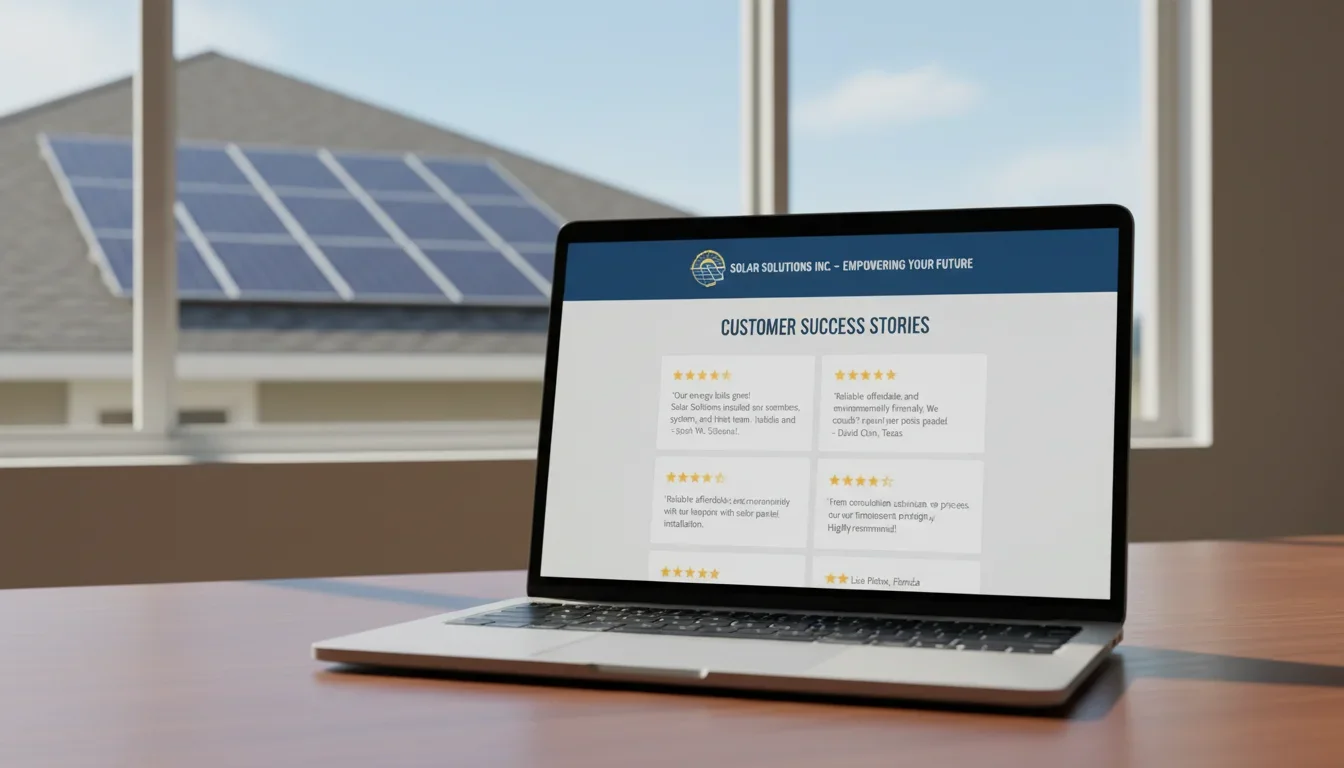
Close-up of laptop displaying positive solar company reviews and testimonials, solar panels visible outside window, professional tone

Driving Sustainable Growth Through Smarter Solar Social Media Marketing

The real power of social media marketing for solar companies lies in its ability to create a full-cycle growth system—one that consistently attracts attention, builds trust, and converts interest into qualified solar leads. Success doesn’t come from random posting or short-term campaigns, but from a structured approach that combines audience-focused content, SEO integration, lead nurturing, and continuous optimization. When solar businesses commit to showing up consistently with educational, engaging, and proof-driven content, they position themselves as reliable industry leaders rather than just another service provider competing for attention.

Ultimately, solar companies that thrive in today’s digital market are those that treat social media as a core business engine—not an optional marketing channel. By measuring performance, refining strategies, and prioritizing real customer needs, businesses can turn every post, comment, and interaction into a meaningful step toward revenue growth. As competition increases and buyers become more research-driven, a strong social presence is no longer just an advantage—it’s a necessity for long-term success in the solar industry.

Happy homeowner showcasing rooftop solar panel installation for social proof and trust in solar company.

Frequently Asked Questions About Social Media Marketing for Solar Companies

Why is social media marketing important for solar companies?

Social media helps solar companies stay visible where modern buyers are already researching and comparing options. It builds trust, showcases real projects, and generates qualified leads before a sales conversation even begins.

Which social media platforms work best for solar lead generation?

Platforms like Facebook and Instagram are strong for residential leads, while LinkedIn is effective for commercial opportunities. The best approach is using a mix of platforms based on where your target audience spends time.

What type of content performs best for solar companies on social media?

Educational content, customer case studies, video walkthroughs, and real installation updates tend to perform best. These formats build trust and help potential customers understand the value of going solar.

How do solar companies turn social media engagement into actual sales?

This is done through structured lead nurturing, including retargeting ads, educational follow-ups, and direct engagement like messages or consultations. The goal is to guide prospects from interest to booked appointments.

How can solar companies measure success in social media marketing?

Success is tracked through key metrics like engagement rates, leads generated, and conversion rates. Monitoring these KPIs helps refine strategies and improve overall return on investment.

What are common mistakes solar companies make in social media marketing?

Common mistakes include inconsistent posting, ignoring audience needs, and failing to follow up with leads. Treating social media as a strategy—not a side task—is key to avoiding these issues.
Large glowing smartphone displaying solar company social media profile floating above a neighborhood with solar-powered homes, cinematic concept art

Take the Next Step in Growing Your Solar Business

If you’re ready to turn your solar marketing into a consistent, lead-generating system, now’s the time to go beyond the basics. From smarter social media strategies to advanced tactics like SEO optimization and structured data, the right approach can dramatically improve your visibility and conversion rates. Banida Solution helps solar companies connect these pieces into one powerful digital strategy that drives real, measurable growth. Visit Banida Solution’s website to explore practical tools, proven strategies, and expert guidance designed to help you attract more qualified leads and stay ahead in an increasingly competitive market.

Digital Marketing Strategies

0 Comments

Write A Comment

*
*
Please complete the captcha to submit your comment.
Related Posts All Posts
05.13.2026

Unlock The Power of Social Media Marketing for Roofing Companies Now

Picture a local homeowner picking up their phone after a surprise storm rolls through the neighborhood, urgently searching for a trusted roofing company. Before they even think about making a call, they’re scrolling through Google ratings, recent Instagram posts, Facebook reviews, and real project updates shared by local roofing teams. In that moment, the companies that stand out aren’t just the ones with great work—they’re the ones showing it. Roofing businesses that consistently share their projects, engage with homeowners, and tell real stories online quickly become the most trusted names in the area. That’s the power of social media marketing for roofing companies: it turns everyday visibility into real credibility, more inquiries, and long-term business growth.Why Social Media Marketing for Roofing Companies MattersRoofing is an intensely competitive local business. Homeowners and property managers are looking online for quick, trustworthy proof—like project photos, reviews, or videos that demonstrate expertise and reliability. Social media marketing for roofing companies is not just an extra channel: it’s a core part of roofing marketing strategy, driving local visibility, brand trust, and a steady flow of leads. By being active and authentic on the right media platforms, roofing companies can create real connections, deliver answers before questions are even asked, and position themselves as industry leaders. Whether you’re a solo roofing contractor or run a multi-crew operation, a well-executed social media strategy helps you become the go-to expert in your area.Understanding Social Media in the Roofing Business LandscapeAs you build your digital presence, it's important to remember that social media is just one piece of the online visibility puzzle. Leveraging tools like schema markup for your home service business can further enhance how your roofing company appears in search results, making your content more accessible and attractive to potential customers.The Evolution of Social Media for Roofing CompaniesFor decades, roofers relied heavily on word-of-mouth, door hangers, and yard signs to attract clients. Traditional roofing marketing worked—but only within the narrow circle of pre-existing networks and chance encounters. Social media marketing for roofing companies completely changes the equation, enabling brands to scale trust, showcase their real-world expertise, and interact directly with a broader local community in real time. Now, each before-and-after project can reach thousands, every testimonial can become a digital endorsement, and questions are answered publicly—making your company’s expertise visible to every potential customer at once.Platforms like Facebook, Instagram, and LinkedIn have ushered in a new era of digital marketing, where lead generation doesn’t depend on luck but on consistent, measured interaction. For a roofing contractor, this means mixing digital education with community engagement, using video to break down complex repairs, and sharing up-to-date project showcases. This evolution not only future-proofs your roofing business but ensures lasting, multiplatform awareness that outpaces competitors stuck in offline-only methods. Your customers are online—your roofing company needs to be omnipresent there, too.Building a High-Impact Social Media Marketing Strategy for Roofing CompaniesCore Elements of a Roofing Marketing StrategyA bulletproof social media strategy for a roofing company starts with clarity. What are your primary goals—more residential estimates, greater commercial projects, a reputation as a local expert? With these goals locked in, the next step is identifying your core audience. Are you targeting homeowners in a rapid-growth suburb, facilities managers in the city, or commercial builders? A focused target lets you tailor your messaging and content, ensuring every post serves real business outcomes.Equally vital is consistency across channels. Omnipresence—showing up consistently across the local digital landscape—means developing a coordinated plan that includes regular content, team engagement, and cross-promotion between platforms and your website. A smart media strategy maps out not just where you’ll be but what you’ll post, how you’ll measure it, and when you’ll adjust. This way, your roofing marketing works for you around the clock, capturing homeowners at the moment they’re searching for answers, not just when you’re on the jobsite.Choosing the Best Social Media Platforms for Roofing CompaniesFacebook, Instagram, LinkedIn, and YouTube each serve a different purpose in a roofing company’s social media strategy, and understanding these differences is key to using them effectively. Facebook excels at community engagement and local trust-building through reviews, groups, and direct customer interaction, while Instagram focuses on fast, visual storytelling that highlights project transformations and on-site progress. LinkedIn is more professional and B2B-oriented, helping roofing companies connect with commercial clients, property managers, and industry partners through thought leadership and business updates. YouTube, on the other hand, supports long-form educational content that demonstrates expertise, answers homeowner questions, and builds long-term credibility through in-depth videos.When it comes to lead generation, the best media platforms for roofing companies are the ones that align with how potential customers search, evaluate, and decide on contractors. Facebook often delivers strong local leads through community visibility and referrals, Instagram drives interest by showcasing high-impact visuals that build quick trust, LinkedIn supports higher-value commercial opportunities through professional networking, and YouTube captures high-intent prospects who are actively researching roofing solutions. The most effective strategy is not choosing just one platform, but prioritizing a mix that matches your audience—balancing immediate local leads with long-term authority and brand awareness.Social Media Platform Comparison for Roofing CompaniesPlatformKey FeaturesAudienceContent FormatsTypical Use CasesFacebookGroups, ads, reviews, community interactionHomeowners, local community, older demographicsPhotos, videos, live videos, reviews, postsProject showcases, testimonials, Q&A, book appointmentsInstagramVisual storytelling, Stories, Reels, hashtagsMillennials, families, visual-first decision makersBefore/after images, quick tips, reels, storiesProject updates, behind-the-scenes, educational snippetsLinkedInB2B networking, expertise branding, company updatesCommercial prospects, facility managers, industry partnersArticles, posts, videos, endorsementsCommercial projects, partnership stories, industry insightsYouTubeLong-format video, how-tos, deep-dive contentDIYers, researchers, property ownersTutorials, walkthroughs, Q&A, case studiesIn-depth repair guides, walkthroughs, educational contentContent That Drives Results: What (and How) to Post on Social MediaTypes of Content for Social Media Marketing in RoofingWhat sets apart high-performing roofing companies on social media is their commitment to authenticity. Instead of flooding followers with generic ads, successful brands invest in content that demonstrates their craft, builds credibility, and creates a sense of community. Showcase dramatic before-and-after transformations to prove your hands-on expertise and reliability. Leverage satisfied customers’ testimonials—user-generated content builds trust faster than most marketing campaigns.Educational content is especially effective in the roofing industry. Short how-to videos, maintenance tips, and myth-busting posts provide genuine value, positioning your roofing business as a resource, not just a service provider. Don’t overlook the power of local highlights—team stories, community partnerships, and behind-the-scenes content humanize your brand, turning your followers into advocates. Mix in promotional updates strategically, making sure every post serves your overall media marketing goals and builds connections that last beyond the next storm season.Building a Consistent Social Media Calendar for Roofing CompaniesConsistency builds anticipation and trust. Successful social media management requires a regular posting rhythm that aligns with your audience’s habits—think mornings on weekdays for homeowners and evenings or weekends for longer-form educational content. A social calendar also allows you to plan around local events, seasonal needs, and weather-driven spikes in roofing marketing interest.Leverage scheduling tools like Buffer, Hootsuite, or built-in platform schedulers to automate posts, ensuring you maintain an omnipresent brand voice even during your busiest weeks. Plan content around annual maintenance reminders, storm prep guides, and community sponsorships for relevance. Vary your content types to avoid fatigue: mix quick tips, project progress snapshots, Q&A videos, and special offers. Remember, your strongest leads are watching—but if you’re not posting, you’re invisible.Proven Tactics for Roofing Marketing on Social MediaEngagement Strategies for Roofing CompaniesIt’s not enough to post and disappear. Engagement is the heartbeat of modern roofing marketing. Replying to comments and direct messages puts a human face on your roofing company, reassuring prospects that you care and respond. Address questions—even tough ones—publicly to showcase transparency and expertise, turning challenges, or even a negative review, into relationship-building moments.Forge deeper engagement by running polls (“Vote on our next project color!”), hosting contests (“Tag a friend to win a free roof check!”), and sharing stories that invite interaction. The more social proof—like customer reviews, case studies, or community partnerships—you display in your feeds, the easier it is for new prospects to trust and contact your roofing business. These actions drive organic reach, repeatedly put your company in the search results, and help grow a loyal local following.Best Practices for Lead Generation Using Social Media MarketingEvery social media post is a chance to nudge someone closer to action. Always include clear, prominent calls-to-action—such as “Schedule your free inspection,” “Request a quote today,” or “See our gallery of projects. ” Take advantage of retargeting campaigns to keep your company top-of-mind for users who have interacted with your website or previous posts. A blend of organic and paid media marketing amplifies your reach, turning passive viewers into active inquiries.Drive all prospects to optimized landing pages that convert visitors into leads—whether that means booking an inspection, downloading a storm readiness checklist, or watching a testimonial video. Track which types of content and campaigns produce the best lead generation results so you can continually refine your strategy. In roofing, the fastest companies to return a call or reply to a message often capture the market—so make your social media a real-time lead engine, not just an online billboard.Getting your first social media marketing campaign live is easier than you think. Start by creating a business profile, selecting your target local area, and writing a simple, benefit-led ad (“Protect your home with a new roof this spring. Free estimates—schedule now!”). Choose attention-grabbing images of your real work—before-and-after photos, smiles with team members, or a video walkthrough. Set your budget, preview your ad, and launch. Track what works and adjust immediately if you see low engagement or off-target leads. Learn from early mistakes—every campaign is a step toward better digital marketing ROI in the roofing industry.How to Measure and Optimize Social Media Marketing Results for Roofing CompaniesKey Performance Indicators (KPIs) for Roofing Company Social Media CampaignsSuccess in social media marketing for roofing companies is measured by impact—not just likes or follower counts, but business-building numbers. Monitor impressions (how many see your content), reach (how many unique users it touches), and engagement (comments, shares, saves). The true value lies in tracking actions: how many people click through to your website, book inspections, or call for emergency services. Tie these metrics to lead quality—did they convert to sales?—and calculate your customer acquisition cost for each channel. This gives you actionable data to double down where you win and pivot when something isn’t working.Tools for Tracking Roofing Marketing ROI on Social MediaMost social media platforms (Facebook, Instagram, LinkedIn, YouTube) offer built-in analytics to track reach, engagement, and conversions. Further, third-party tools like Sprout Social or Buffer provide deeper reporting and competitive benchmarking, helping your roofing business see what really moves the needle. Integrate Google Analytics to track traffic and conversions from your social posts straight down to quote requests or appointments. This closed-loop measurement turns your media campaigns from a guessing game into a reliable digital marketing engine, optimizing both time and ad spend.Common Mistakes in Roofing Company Social Media Marketing (& How to Avoid Them)Too many roofing contractors launch media campaigns with enthusiasm—then disappear when the job gets busy. Inconsistent or poorly managed feeds erode trust fast, making your company look unreliable. Avoid posts that only pitch services; instead, focus on content that educates, engages, and builds your brand as a helpful neighbor. Always respond to feedback—especially criticism—as it’s an opportunity to demonstrate your company’s values and resolve issues in view of future clients. Set clear, measurable goals and track your progress. Finally, customize content for each platform; what works on LinkedIn may be ignored on Instagram. Smart business owners plan, automate, and delegate as needed to keep their digital presence as sharp as their craftsmanship.Inconsistent posting or neglecting your social media accountsOverly promotional or low-value postsIgnoring negative feedback or customer messagesNot setting clear goals for your roofing marketing strategyFailing to use unique content for different social media platformsIntegrating Social Media Marketing with Other Digital Marketing StrategiesNo marketing channel succeeds in a vacuum. Powerful roofing marketing strategies connect social media marketing with search engine optimization, proactive email campaigns, and review management. For instance, post new blog content to both your website and Facebook; use reviews from Google in your Instagram Stories; share video tips from your YouTube channel in your monthly email newsletter. Cross-promoting these touchpoints creates an atmosphere of omnipresence, reinforcing your expertise at every customer touchpoint. Over time, this integrated media management approach turns your local business into the most trusted, visible roofing company in your market—a true authority, both online and offline.Frequently Asked Questions About Social Media Marketing for Roofing CompaniesHow often should roofing companies post on social media?For best results, aim for at least 3-5 posts per week per platform. Consistent posting keeps your brand visible and drives ongoing engagement, but quality always outranks quantity.What types of social media content get the most engagement for roofing businesses?Before-and-after project photos, customer testimonials, educational how-tos, and team/community stories drive the highest engagement and build long-term relationships.Can social media advertising help attract more roofing leads?Absolutely. Targeted social ads reach local homeowners, retarget leads who visited your site, and boost your visibility during storm seasons or special promotions.Is social media marketing or traditional marketing better for roofing companies?Both have value; however, social media offers broader reach, lower costs, and real-time engagement. For ongoing growth, combine both with a digital-first focus.What budget should a roofing company allocate to social media marketing?Budgets vary, but starting with 5–10% of your marketing spend on social (split between organic and paid) allows for meaningful testing, learning, and improvements.How do you measure ROI on social media marketing for a roofing company?Use platform analytics and Google Analytics to tie content/posts to website traffic, inquiries, and booked jobs. Combine these results with cost tracking to get true marketing ROI.Building a Stronger Future for Your Roofing Business Through Social MediaSuccess with social media marketing starts with intention. Roofing companies that see real results begin by setting clear, measurable goals—whether that’s generating more local leads, increasing brand awareness, or building a stronger referral network. From there, the focus should always shift toward trust and community. Roofing is not a transactional service; it’s a relationship-driven industry where homeowners need confidence in who they’re hiring. That trust is built through consistent, authentic content that reflects your work, your team, and your commitment to quality.Long-term success doesn’t come from sporadic posting—it comes from consistency, adaptability, and continuous learning. Roofing companies that tailor their content to their audience, stay active across the right platforms, and regularly measure performance will always have the edge. And while social media is a powerful driver of visibility and leads, its impact grows even stronger when combined with other digital strategies that enhance authority and search presence. By integrating social engagement with tools like advanced SEO and structured data, your roofing business can stand out in search results, attract higher-quality leads, and build lasting credibility in your local market.Take the Next Step Toward Growing Your Roofing BusinessIf you’re ready to move beyond inconsistent leads and start building real visibility, trust, and long-term growth for your roofing company, now is the time to act. Social media marketing can transform how customers find and choose your business—but only when it’s done with the right strategy behind it. Learn how Banida Solutions helps roofing companies turn everyday content into consistent leads, stronger brand authority, and measurable results. Visit Banida Solutions to explore a customized approach built to elevate your online presence and position your business as the go-to choice in your local market.

05.11.2026

Boost Your Leads Now with Social Media Marketing for Contractors

Imagine wrapping up a renovation project when a neighbor walks over—not because they spotted your yard sign, but because they just watched your team’s timelapse on Instagram. That’s the shift happening right now. For contractors, social media isn’t just a place to post polished before-and-after photos—it’s where visibility, trust, and real opportunities are built day by day.In this guide, we’ll break down how to show up consistently, connect with the right audience, and turn engagement into actual leads for your construction business—without the fluff or guesswork.Why Social Media Marketing for Contractors Matters in the Construction IndustryThe construction industry is built on relationships, reputation, and trust. But in an increasingly digital world, even the most established contractors can struggle to reach new audiences or stand out from the competition. That’s where social media marketing for contractors comes in. These platforms help construction companies showcase their work, connect with local communities, and engage with new potential clients—often before a project even breaks ground. Whether you’re a specialty contractor or a larger construction company, having a robust online presence on social media is now as fundamental as having a polished website or a branded truck in your fleet. The right marketing strategy can position your business as not just another name in the directory, but as the trusted authority for quality work in your region.With the lines between digital marketing and traditional networking blurring, contractors who understand the impact of social media have a clear advantage. It’s not just about being seen; it’s about being remembered, building your professional network, and making sure that when a potential client goes looking for recommendations, your name and recent projects are top of mind. Media marketing for construction companies lets you stay connected with past clients, respond to inquiries in real-time, and demonstrate your expertise to a wider audience. In short, it moves your brand from simply existing in the market to actively influencing your market.Understanding the Impact of Social Media on Construction CompaniesSocial media has reshaped how construction companies connect with potential customers, vendors, and even employees. Where word-of-mouth once dominated, now visual platforms like Instagram and Facebook let you demonstrate craftsmanship, share customer reviews, and answer prospective client questions directly. The interactive nature of these networks means that every project post or behind-the-scenes video isn’t just marketing—it’s an invitation for engagement. This can not only generate leads but also build trust with your audience as they see your track record and work ethic display in real-time.For contractors, the shift to social isn’t about chasing fleeting trends; it’s about leveraging tools your competitors are already using (and excelling with) to showcase project milestones, share expert tips, and cultivate lasting relationships. Today’s consumers do their homework—often scrolling through media pages and social network recommendations even before checking your website. Being active and authentic on these platforms reinforces your professionalism and accessibility, qualities that matter when someone’s about to entrust you with their home or business.Construction Industry Shifts: The Rise of Digital MarketingDigital marketing is now a foundational part of winning construction projects. The construction industry historically relied on referrals, word-of-mouth, and trade shows, but in the current landscape, contractors are embracing a blend of traditional outreach and powerful online marketing tactics. Social media marketing for contractors is important because it allows your business to shift from sporadic lead generation to a steady pipeline of inquiries, thanks to consistent, targeted exposure.As younger, tech-savvy homeowners and project managers take the helm, they expect to see proof of your work and read honest reviews before making hiring decisions. The evolution of media platforms—combined with targeted paid ads—means you can get laser-focused with your marketing efforts, reaching the right audience based on interests, location, and behavior. Whether you’re aiming to fill your calendar for the upcoming season or build brand awareness within the commercial space, a compelling digital marketing plan anchored in social media will be key to staying competitive and top-of-mind.The Benefits of Social Media Marketing for Construction CompaniesIf you’re still wondering if social media is worth your time, consider this: the best contractors are using media marketing not just for advertising, but for relationship building, lead generation, and reputation management. Social media marketing for contractors provides multiple advantages—enabling your company to access pools of quality leads, increase brand awareness, and build trust with both new and existing customers. With an authentic ongoing presence, you become the top referral when someone in your local area searches online for construction, renovation, or specialty contracting services.A smart, targeted approach to social media doesn’t replace your old-school business cards—it amplifies them, putting your recent projects, testimonials, and insights in front of hundreds (or thousands) more prospective clients. What’s more, it opens the door to real-time feedback, making it easier than ever to build trust, address concerns, and turn satisfied clients into enthusiastic public advocates for your work.As you refine your digital marketing approach, it's also worth considering how technical enhancements like schema markup for your home service business can further boost your online visibility and credibility. Integrating these behind-the-scenes SEO strategies with your social media efforts can help your construction company stand out even more in search results.Lead Generation: Turning Social Media Engagement into Quality LeadsSocial media marketing is one of the most direct ways to generate leads and fill your construction project pipeline. Every post, story, or comment becomes a potential touchpoint with a prospective client, making it easier to showcase your expertise and nudge interested homeowners or businesses further down the path to a contract. Quality leads on social platforms aren’t just numbers—they are potential customers who have seen your past results, interacted with your content, and already feel a level of trust with your construction company before the initial consultation.To maximize lead generation, contractors should combine regular posting with prompt responses to inquiries, strategic use of hashtags and local geotags, and promotional content like limited-time offers or paid ad campaigns. Each successful customer interaction, testimonial, or before-and-after post can act as a magnet, converting casual browsers into active prospects. Remember, engagement drives visibility—the more your posts are liked, shared, and commented on, the more likely your business will be seen by a wider local audience looking for construction or renovation services.Brand Awareness and Trust: Building Authority in the Construction SectorFor construction companies, brand awareness is more than a logo; it's the sum of every online interaction. By maintaining an authentic and consistent presence across your selected media platforms, you reinforce your reputation as a reliable, trustworthy contractor. Every project update, safety tip, and customer success story helps build a public narrative around your quality, professionalism, and attention to detail.Trust is often the deciding factor for potential clients choosing between multiple contractors. Social media marketing allows you to display your company’s core values and culture, show off your team at work, and address questions or challenges transparently. A robust online presence, populated with reviews and interactive content, turns your construction social media pages into a living portfolio that can sway decisions in your favor—even against larger or more established competitors.Customer Relationships: Engaging Directly with Clients and ProspectsDirect engagement on social networks helps construction companies stay top-of-mind with previous customers and warm up new prospects. By replying to comments, sharing progress updates, and highlighting client testimonials, you build a two-way relationship that goes far beyond static advertising. These interactions foster loyalty, turn satisfied clients into repeat customers, and lay the groundwork for referrals, which remain the lifeblood of the construction industry.Social media also allows you to humanize your business. Building a presence where potential clients see real faces, hear real stories, and experience the personality of your team can be the difference between being seen as just another contractor and being seen as a trusted, preferred partner for their next project.Reputation Management via Social Media PlatformsEvery construction business lives and dies by its reputation. In today’s digital-first world, social media platforms double as review boards and public forums. That means potential customers often form opinions about your company before ever calling you—based on how you respond to feedback, showcase completed work, or handle challenging situations.Effective reputation management on social media includes monitoring mentions, responding promptly to both praise and criticism, and using user-generated content to bolster credibility. Positive reviews and regular, substantive posts about safety, quality control, or team milestones help mitigate any negative interactions and demonstrate accountability—another trust-building advantage for your brand.Comparison of Social Media Platforms Used by Construction CompaniesPlatformFeaturesStrengthsLead Generation PotentialFacebookGroups, business pages, local ads, reviewsCommunity engagement, event promotionsHigh for homeowners and local businessesLinkedInB2B networking, company pages, industry articlesProfessional network, partnership buildingStrong in commercial and industrial constructionInstagramImages, stories, reels, hashtagsVisual showcase, brand personalityModerate to high among design-focused clientsYouTubeEducational videos, project showcases, vlogsTutorials, “how-to” content authorityExcellent for SEO and complex project exposureTikTokShort-form video, trending audio, viral potentialHumanizing, trendy, reaches younger demographicGrowing rapidly for DIY and inspirational contentStep-by-Step Guide: Building a Social Media Marketing Strategy for ContractorsTo turn your social channels from passive pages into a true engine for quality leads, you’ll need a plan tailored to the realities of the construction industry. Here’s a structured approach that connects business goals with audience needs, platform strengths, and consistent, authoritative media marketing.The following steps will help your construction company build trust, expand its digital footprint, and ensure that every tweet, post, or video supports your broader business objectives—while keeping resource investment and ROI in check.Step 1: Set Clear Objectives Aligned with Your Construction Business GoalsStart by identifying what you want your social media marketing for contractors to achieve. Is your primary focus to generate leads? Grow brand awareness? Recruit new team members? Each goal dictates a specific strategy and set of KPIs. For example, lead generation might require a mix of real-time project updates, targeted paid ads, and click-to-call posts. Tracking these objectives ensures your media marketing efforts stay focused and measurable.Write down objectives for the quarter and align them with achievable outcomes—for example, “Increase project inquiries by 15%,” or “Boost Google review count to 100. ” These benchmarks allow you to refine your strategy and demonstrate tangible progress to stakeholders.Step 2: Identify and Understand Your Target Audience in the Construction IndustryThe key to effective construction social media is knowing who you want to reach. This might include homeowners in specific neighborhoods, architects, property managers, or fellow contractors for potential partnerships. Create detailed buyer personas—where do they spend time online? What types of content do they engage with? Do they respond to detailed project breakdowns, safety tips, or quick video tours?By mapping out your target audience’s behaviors and needs, you avoid generic marketing and ensure your content resonates. Engage proactively—ask questions in posts, encourage direct messages, or use surveys and polls to guide future content creation.Step 3: Select the Best Social Media Platforms for ContractorsNot every platform makes sense for every construction business. For example, if your projects are highly visual and design-focused, Instagram is a great fit; if you’re targeting property developers and commercial clients, LinkedIn offers professional connections. Use your objectives and audience profile to guide where you focus your time—and consider managing two or three platforms well, rather than spreading yourself thin across all social networks.Test each platform with a few weeks of posts; track what gets shared, commented on, or drives direct inquiries. Over time, refine your list to those that consistently help you reach quality leads and build authority within your niche.Facebook: Community building and local advertisingLinkedIn: B2B networking and partnership opportunitiesInstagram: Portfolio sharing and visual impactYouTube: Educational video content and project showcasesTikTok: Short-form, engaging construction tipsStep 4: Craft High-Impact Social Media Content for Construction Social MediaContent is king—especially in the construction industry where visual proof can mean the difference between an inquiry and a scroll by. Dedicate time to developing a content mix that balances finished project photos, work-in-progress updates, team introductions, client testimonials, and educational tips relevant to your target audience.Show, don’t just tell. Short videos documenting on-site solutions or time-lapse sequences of renovations resonate powerfully on visual platforms like Instagram and YouTube. Also, blend “soft” content that builds brand awareness—like behind-the-scenes looks at your safety culture or eco-friendly choices—with harder calls-to-action encouraging direct contact or estimate requests.Step 5: Build and Maintain an Online Presence Across Key Media PlatformsConsistency in posting is vital for keeping your construction company relevant and visible. Develop a plan to update your media pages at least several times each week. Use scheduling tools to ensure regular, timely content even during busy project cycles. Respond to comments and direct messages within one business day—fast replies signal professionalism and set you apart from competitors who let inquiries linger.Don’t neglect your business profiles—make sure all your contact information, service areas, recent project photos, and customer testimonials are up to date. This not only fuels discovery via search or map queries but reinforces trust when potential leads check your social media presence as part of their vetting process.Step 6: Monitor, Measure, and Adjust Your Digital Marketing CampaignsWhat gets measured gets improved. Track metrics such as post engagement rates, direct inquiries attributable to specific platforms, profile visits, and lead conversions. Review analytics every month to identify trends—what content gets shared, when your audience is most active, and which campaigns lead to actual projects booked.Adjust your strategy as you learn from your analytics. If photo-driven posts trigger fewer leads than case study videos, shift your content mix accordingly. Don’t treat your social media as a “set-it-and-forget-it” system—continual iteration is essential in digital marketing to achieve optimal ROI.Content Ideas and Calendar: What to Post on Social Media as a ContractorMixed, engaging content keeps your brand top-of-mind and demonstrates the full scope of your expertise. Here are practical post ideas proven to spark engagement and drive real leads for contractors:Before-and-after project imagesClient testimonials and reviewsOn-site team introductionsIndustry insights and how-to guidesReal-time project updates30-Day Social Media Content Calendar for Construction CompaniesDayContent TypeDescriptionDay 1Project HighlightShowcase a completed project with before/after photosDay 3Team SpotlightIntroduce a crew member with a fun factDay 5TestimonialShare a recent client reviewDay 7How-to VideoPost a short clip explaining a construction tipDay 10Live Q&AHost a quick session answering top renovation questionsDay 14Safety PostHighlight a safety protocol in actionDay 16Progress UpdatePost on a project mid-way through completionDay 19Industry NewsShare commentary on a recent construction trendDay 23Referral Shout-OutThank a client for a recent referralDay 28FAQ CarouselAnswer top 3–4 questions you hear from potential clientsExpert Tips for Maximizing Engagement with Social Media Marketing for ContractorsStanding out on crowded platforms requires more than great visuals—it’s about timing, consistency, and interaction. Apply these field-tested tips to keep your construction company top-of-mind and your audience growing.Consistency: Frequency Guidelines for PostingOne of the biggest obstacles contractors face is inconsistent posting. To build familiarity and trust, you should aim to publish new content at least two to three times per week on each prioritized social platform. Use content scheduling tools to plan ahead, ensuring you remain visible even during hectic job phases.Predictable, regular posts reinforce your social media presence—and keep you on the radar of both potential clients and referral partners. Remember: showing up consistently outperforms sporadic bursts of posting, both in follower growth and platform reach.Best Practices for Engaging Your Audience on Social Media PlatformsRespond promptly to all comments and messages—your followers are more likely to trust and refer a business that’s approachable and attentive. Encourage real-time engagement with interactive content like polls, quizzes, or “Ask Me Anything” stories. Use location tags on posts to attract local clients and promote community ties.Mix polished professional project photos with more informal updates showing your team at work or learning something new. This combination feels authentic and keeps your brand relatable—both important for sustained growth in media marketing.Leveraging Digital Marketing Tools for Construction Social Media CampaignsDigital marketing offers a wealth of tools to measure, automate, and improve your social media strategy. Use analytics dashboards (like Facebook Insights and Instagram Analytics) to review what’s working. Try scheduling platforms such as Buffer, Hootsuite, or Later to batch posts and monitor engagement.Experiment with paid ad campaigns for specific promotions, geo-targeting, or retargeting previous website visitors. Integrate your social media workflow with CRM systems to move leads efficiently from inquiry to contract. Remember, automation doesn’t replace personal touch—it frees you to focus on authentic engagement at key moments.Measuring Success: KPIs for Social Media Marketing for ContractorsImprovement only comes with measurement. Social media marketing for contractors depends on accurate, action-driven analytics that tie directly to business results.Tracking Lead Conversions and ROI for Construction BusinessFocus on metrics that matter, i. e. , those that connect social posting to real-world results. This means tracking not just likes and shares but the volume of quality leads, completed contact forms, direct messages for quotes, and requests for site visits. UTM codes, platform-specific analytics, and periodic surveys (“How did you hear about us?”) are all effective tools for attributing leads to social media marketing efforts.Evaluating ROI means looking beyond vanity metrics. Assess the cost (time and dollars) of content creation and paid promotion relative to the new opportunities, contracts, or referrals generated. Over time, these analytics can guide resource allocation and justify scaling successful digital marketing campaigns.Analyzing Brand Awareness and Follower Growth MetricsKeep tabs on brand mentions, profile visits, follower counts, and share rates. Follower growth velocity, comment sentiment, and the frequency with which your posts are saved or shared indicate whether your content resonates with your target market. Identify which types of posts (e. g. , before-and-after images, timelapse videos, or educational reels) attract the highest engagement—and double down on those for sustainable growth.Social listening tools can measure the tone and topics associated with your company. Are you attracting comments that suggest curiosity, excitement, or trust? This feedback, both quantitative and qualitative, offers a holistic view of your position within the market.Social Listening: Monitoring Online Reputation and Customer SentimentSocial listening involves tracking not only direct brand mentions but also industry-wide conversations where your expertise might add value. Use tools that flag comments, reviews, or messages containing your company name (and competitors’!). This allows you to address concerns quickly, acknowledge praise authentically, and spot trends in what potential clients are most concerned about.Timely, polite responses to public comments—positive or negative—can defuse issues and reinforce your reputation as an accessible, high-integrity construction business. Combine sentiment analysis outputs with your ROI tracking to ensure you’re not just visible, but trusted and respected within your market.Key Performance Indicators and Recommended Tools for Construction Industry Social MediaKPIWhat It MeasuresRecommended ToolsEngagement RatePost interactions vs. follower sizePlatform Analytics, Sprout SocialLead Conversion RateLeads generated from social channelsGoogle Analytics, CRM trackingBrand MentionsOnline conversations about your companyHootsuite, MentionFollower GrowthNew followers over timeNative Insights, IconosquareShare of VoiceHow your presence compares to competitorsBrandwatch, Rival IQAvoiding Common Pitfalls in Social Media Marketing within the Construction IndustryNo strategy is foolproof. Even experienced contractors can stumble in their digital marketing efforts. The most frequent missteps stem from lack of consistency, poor engagement tactics, and insufficient measurement. Here’s what to watch out for (and how to avoid these traps):Inconsistent posting schedulesNeglecting customer interactionsIgnoring data analyticsFocusing only on self-promotionBringing It All Together: Turning Social Media Into a Real Growth Engine for ContractorsSocial media marketing for contractors is no longer optional—it’s a core part of how construction businesses grow, compete, and stay relevant. From showcasing finished projects to sharing behind-the-scenes progress, every post helps shape how your audience perceives your work. More importantly, it builds familiarity long before a potential client ever requests a quote. When done consistently and strategically, social media becomes more than a marketing channel—it becomes a steady pipeline of trust, visibility, and qualified leads that supports your business in the long run.The key takeaway is simple: success doesn’t come from random posting or chasing trends, but from a clear strategy that combines strong content, the right platforms, and ongoing engagement. Contractors who commit to showing up, telling their story, and interacting with their audience are the ones who stand out in an increasingly crowded market. As digital habits continue to shape how people choose service providers, your social presence can be the difference between being overlooked and being the first call for a new project.Frequently Asked Questions on Social Media Marketing for ContractorsHow can social media marketing generate quality leads for construction companies?By showcasing projects, posting reviews, and answering real-time questions, social media marketing for contractors connects your business with homeowners, property managers, and other potential clients at the moment they’re looking for expertise. Consistent, value-driven posting builds trust and prompts direct contact.What types of content work best for construction social media marketing?The most effective content includes before-and-after photos, timelapse build videos, satisfied client testimonials, staff introductions, safety tips, and educational how-to guides. Mixing these formats keeps followers engaged while amplifying your craftsmanship and professionalism.How do I measure ROI from my media marketing efforts?Track the number and quality of leads sourced from each platform, direct website traffic from social posts, post engagement rates, and the percentage of inquiries progressing to contracts. Use analytics tools and periodic client surveys to attribute projects back to your media marketing activities.Are paid ads on social media worth it for a construction company?Paid ads can be effective when targeted to the right audience and offer a clear call-to-action. Test small campaigns focusing on local homeowners or B2B clients, and compare the cost of each qualified lead vs. free, organic methods to determine the best ROI for your market.How do I handle negative reviews or comments on my business accounts?Respond promptly and courteously, offer to resolve issues offline if appropriate, and highlight your commitment to customer satisfaction. Transparently addressing criticism often turns negatives into positives, deepening trust with both the reviewer and wider audience.Dynamic overview: See construction teams in action, contractors posting on social media, engaging followers, and seeing analytics dashboards light up—showcasing real project transformations, audience interactions, and the impact of well-executed digital marketing. Modern, high-energy, and professional—perfect inspiration for your next campaign.Ready to Transform Your Construction Business?If you’re ready to take your construction company beyond the local directory and turn it into a trusted, in-demand brand, now is the time to put these social media strategies into action. Social media marketing for contractors—when done with the right strategy—can consistently generate leads, build authority, and position your business as the go-to choice for residential and commercial projects.To see how a more complete digital approach can accelerate your growth, explore how Banida Solution helps construction businesses strengthen their online presence through social media, SEO, and advanced strategies like local search optimization and structured data. Visit Banida Solution’s website to learn how a connected, results-driven marketing system can turn your expertise into measurable business growth.

04.17.2026

The Brands Growing Fastest All Have One Thing in Common

Discover why certified video marketing is the secret behind the fastest-growing brands — and how expert-led, data-driven video campaigns can close the gap for yours.

Terms of Service

Privacy Policy

Core Modal Title

Sorry, no results found

You Might Find These Articles Interesting

T
Please Check Your Email
We Will Be Following Up Shortly
*
*
*